
No Countywide Named Arrest Log
St. Charles County publishes no countywide booking blotter. Neither agency posts a public arrest roster. The county online-services inventory lists Corrections contact details and JailATM for account and bail functions, not a roster anyone can browse. The Sheriff's Department handles court security, civil process, bailiffs, and prisoner transportation. Its page is not a daily arrest log. For named arrests, the Missouri State Highway Patrol Arrest Search is the nearest official list. It keeps preliminary reports online for five days. Coverage stops at MSHP. City arrests and county bookings can exist without appearing there, and the results carry no booking-photo column.
St. Charles Blotter Source Windows
Compare multi-day sources by scope and cadence, not appearance. A map's date range is not an arrest archive. And a five-day MSHP result does not show who entered or remained in county custody.
| Source | Window and scope | Names or photos |
|---|---|---|
| MSHP Arrest Search | Five days online; automatic; Patrol arrests only | Names and report fields; no apparent photo |
| St. Peters Crime Mapping | Updated Mondays; formal city reports with exclusions | Not a named booking roster or gallery |
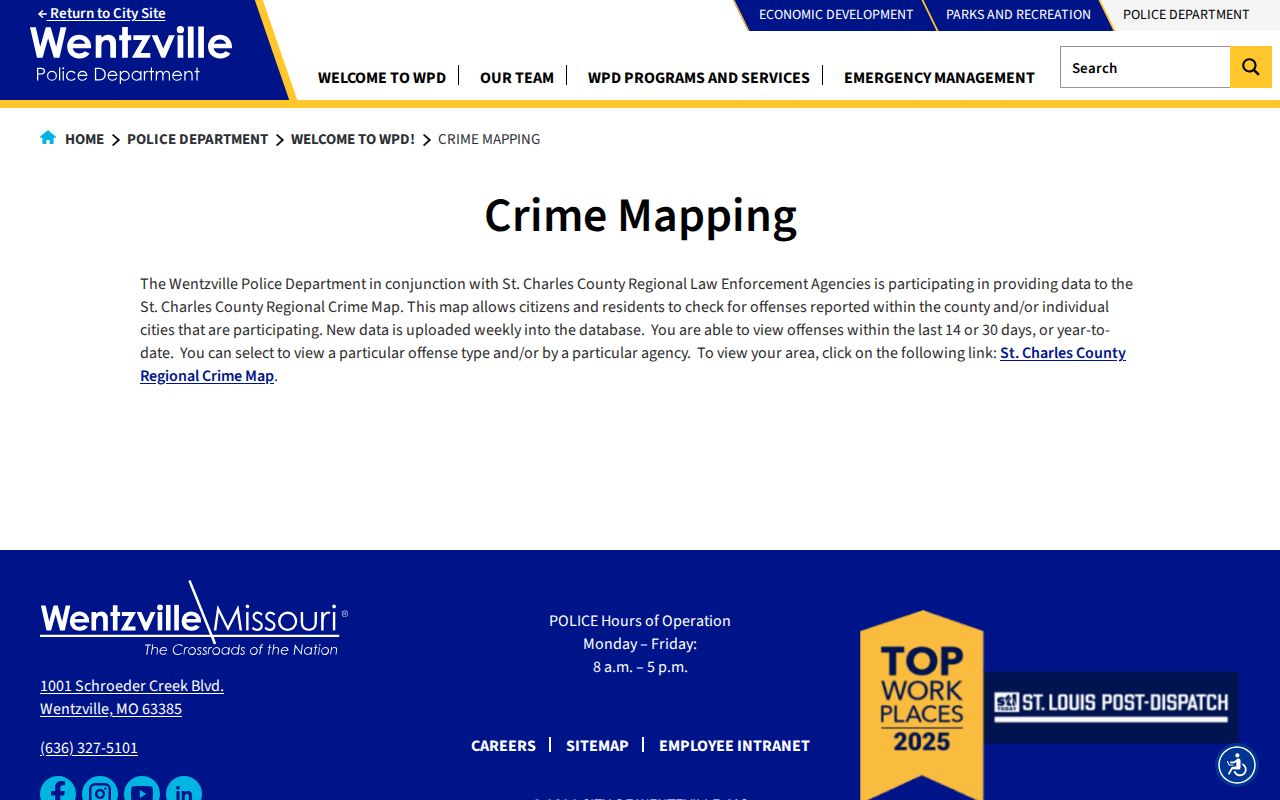
| Wentzville regional map | Weekly upload; 14-day, 30-day, and year-to-date views | No booking gallery |
| County Police records | Request-specific; unincorporated county cases | Depends on record status and redaction |
| Agency and local news | Event-driven and selective | May name people or use supplied images |
These channels overlap without matching. A public map may drop a person's name from a formal incident report. An arrest can precede booking. News tends to cover only the serious or unusual case, so the original agency and the court remain the confirming sources.
Read St. Charles Multi-Day Reports
Start from the date, the place, and the agency. That habit prevents wasted searches on the wrong city map. An MSHP or county-police event will not show up there, so save each source's update date along with the event date.
- For a Highway Patrol event, search St. Charles County across the relevant dates inside the five-day MSHP window.
- For St. Peters, use its official map date controls and remember that updates occur Monday during normal business hours.
- For regional geography, use Wentzville’s 14-day, 30-day, or year-to-date controls and filter by agency or offense.
- Identify the agency that owns the report. Request that record rather than treating the map pin or news item as the full file.
- Check Missouri Case.net for a later court filing and disposition. A filing can lag an arrest and is not itself proof of guilt.
For a same-day event, try Arrests Last 24 Hours. That search leans on same-day MSHP reports and direct custody checks. The blotter window spans several days instead.
Regional Maps Are Not Blotters
The St. Peters Crime Mapping page charts formal reports, not all police activity. Calls for service stay off the map. Sensitive domestic, juvenile, and family incidents are omitted too. Updates land on Mondays, so a late-week event can wait for the next cycle. It gives context, not a booking record. The official St. Peters crime map shows the date ranges, report types, and filters a visitor will meet.
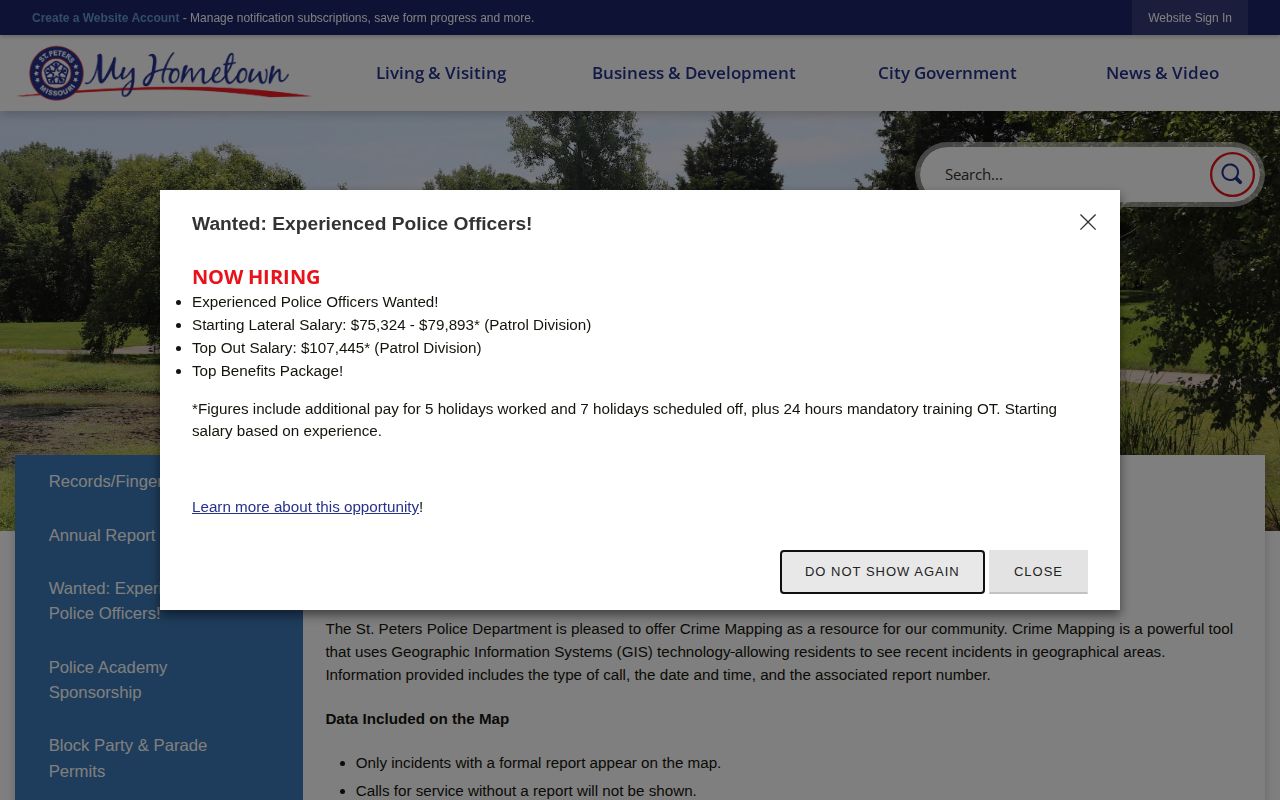
The St. Peters screen helps with dates, locations, and exclusions, but it is no county booking list. The Wentzville regional crime map widens the view. It offers 14-day, 30-day, and year-to-date windows. Uploads happen weekly. Filters cover agency and offense type. Wentzville matters regionally even though it sits outside the three city pages here. The Wentzville Police crime-mapping page displays those broader time controls on the city's own site.
Treat a regional map as a lead generator. Pull the actual report from the agency that wrote it.
What Blotter Sources Actually Show
St. Charles County has no single public arrest-log format. Every field must be traced back to its source, so a map detail is never mistaken for a custody fact.
| Field | Where it belongs |
|---|---|
| Arrest date/time, county, troop | MSHP preliminary arrest report |
| Person name, age, city/state | MSHP result; verify identity separately |
| Incident date, type, report number | Municipal or regional map where displayed |
| Arresting agency and location | Agency report or CAD record; request when absent |
| Booking time, release, transfer, bond | Corrections or municipal booking record, not inferred from a map |
| Booking photograph | Ask the booking custodian whether one exists and is releasable |
| Disposition | Court record, after filing and later case action |
Fields shift over time. Bond amounts change, release does not close a case, and a transfer moves custody without altering the underlying report. Write down the date of every lookup.
News Is Selective Arrest Context
The First Alert 4 St. Charles County section is the strongest live local-news source for the area. Stories run when events are newsworthy. It is no daily booking roll. Reports may cite police, courts, county officials, or agency-provided material, and a supplied image is not always a booking portrait. The First Alert 4 county index lists current headlines.
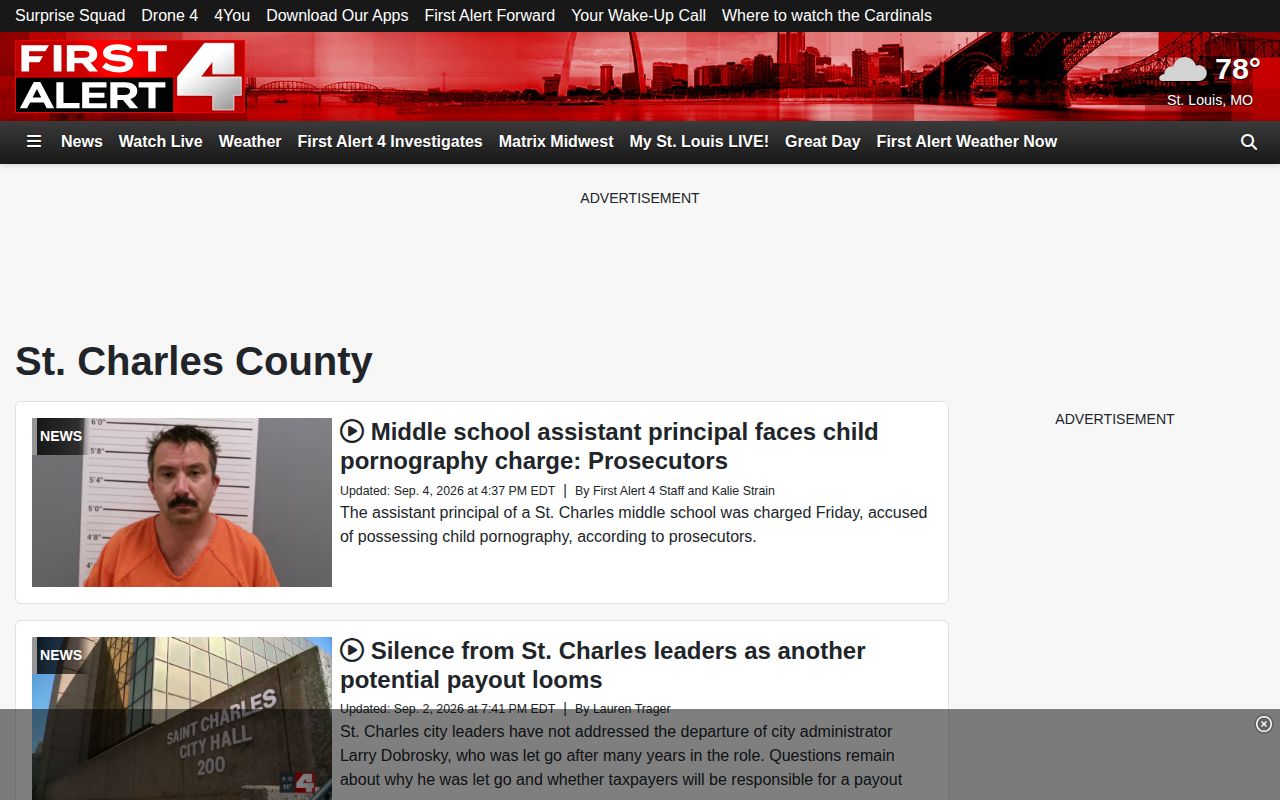
A news index can surface an agency or court lead. It cannot show every arrest or settle current custody. The St. Louis Post-Dispatch crime and courts section covers the region, and St. Charles County stories appear there incidentally. City press pages vary widely. St. Charles runs NewsFlash, and O'Fallon posts police information, but neither works as a full daily named arrest log. Keep the outlet's wording intact, words like "alleged," "charged," and "according to." Third-party sites trail far behind official sources. Mugshots.com keeps a historical St. Charles County page filled with old entries and many missing images, and it is neither current nor official. Recently Booked and Busted Newspaper list no county-local section. Stick to the source record and the court result that follows.
Older St. Charles Arrest Records
A five-day MSHP display or a weekly map shows what is fresh, not what an agency must keep. Missouri sets the floor through its local-government records schedules. Those schedules say how long booking material must be held at minimum. Nothing stops an agency from keeping a file longer. Litigation, audits, and other legal holds can also block destruction. County Corrections publishes no booking-record retention period of its own.
St. Peters shows how one city handles it. Its municipal schedule covers arrest logs, arrest files, registers, fingerprints, and booking sheets for five years. That rule binds St. Peters Police alone. It says nothing about County Corrections or the St. Charles city jail.
Digging for an older St. Charles County arrest record starts with the St. Charles County Registrar. Name the agency, the record series, and the date range. Add a person or report number, the record type, and the format you want. Ask which schedule governs the file and its status: active, archived, transferred, sealed, expunged, or on hold. Sealed and expunged files may be closed to the public entirely.
Historical statistics can confirm older annual booking and release totals for the county. Those are counts, though, not person-level arrest logs. When a name drops off a roster, ask the department first. The Registrar may control an archived series, or the file may have moved under a state schedule. Inspection alone is often enough. If you need a copy, say whether it must be electronic or certified. Fees and wait times hinge on the record's form, staff research time, redaction, and what the law opens.
Note: web publication windows control what stays visible online, while retention rules control how long the agency keeps the arrest record itself.
Arrest Logs Do Not Prove Guilt
Blotter entries are paperwork from a busy shift. Names can repeat. Spellings can vary. Match names with care, keep the source date, and check with the originating agency or court before acting on what you found.